
Dan M. Jones and the team at On Top Marketing built a new ecommerce website for one of our retail clients, on a brand new domain with no history: no previous website, no content, no backlinks and no redirects. We built it around just one manufacturer, out of the many brands our client stocks.
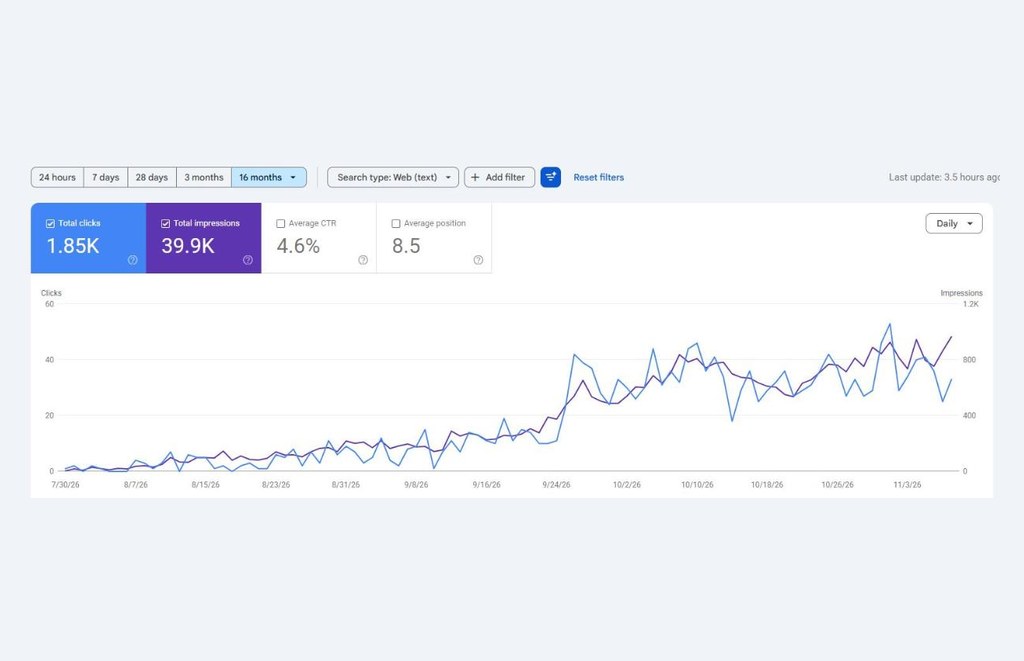
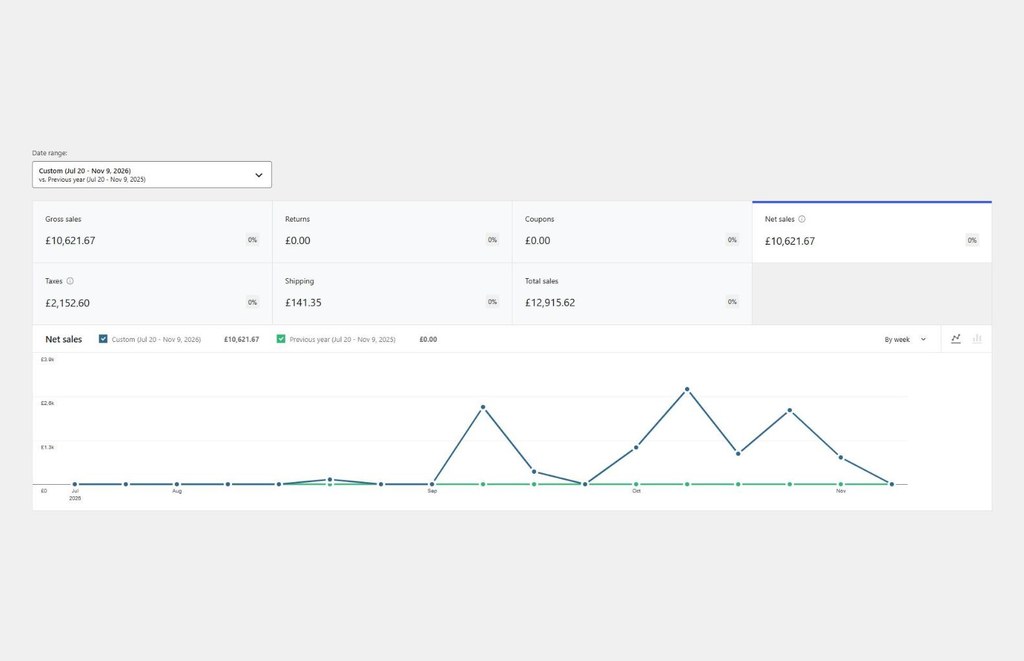
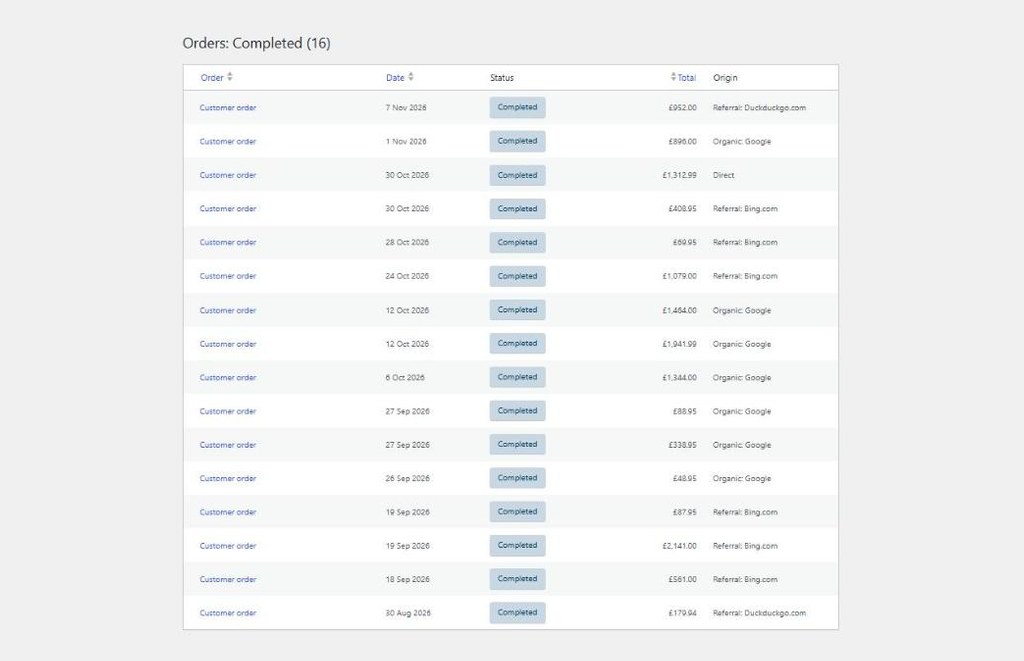
It first appeared in Google on 30 July 2026, and its first sale came in 31 days later. By 7 November, 100 days after that first appearance, it had taken 16 completed orders worth £12,915.62. Seven of those orders were over £1,000 each.
These are full price, high ticket products, and the site sells them without a penny spent on ads. Almost 90% of the revenue came from people who found it through Google, Bing and DuckDuckGo.
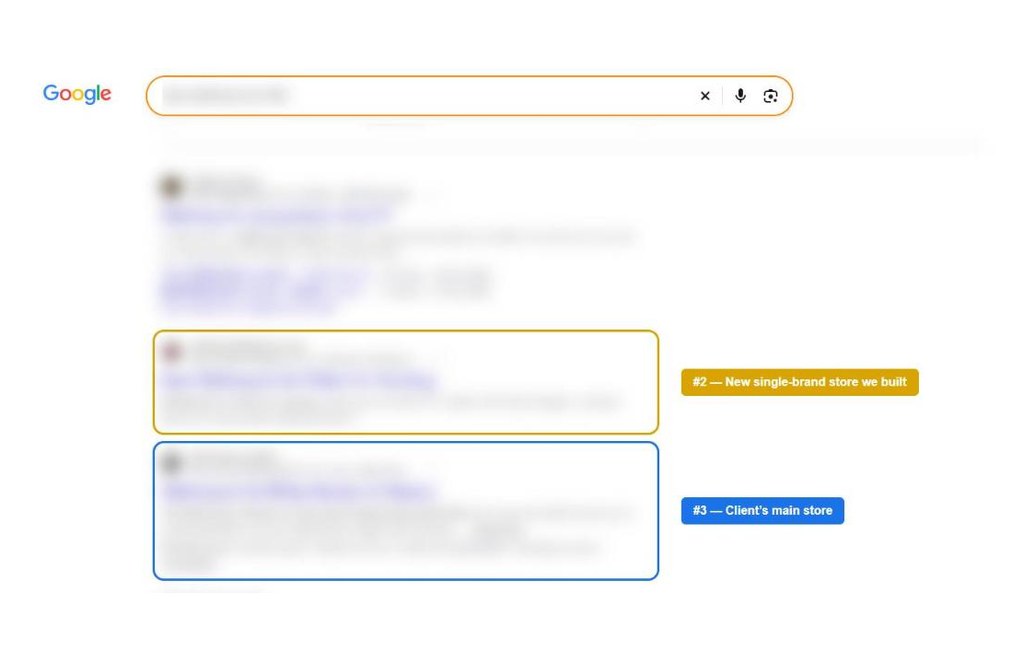
The client’s main store already ranked for this manufacturer. The new site now ranks next to it, so the client often holds two page one results for the same search. Whichever listing the customer clicks, the sale goes to our client.
Results
- £12,915.62 in completed sales across 16 orders, at an average of £807 per order.
- First sale 31 days after the site first appeared in Google.
- 7 orders over £1,000, the largest £2,141.
- 89.8% of revenue from search engines: £6,122.84 from Google, £4,347.85 from Bing and £1,131.94 from DuckDuckGo.
- Monthly Google clicks rose almost 10x in two months, from 104 in August to 422 in September and 1,032 in October.
- Monthly impressions rose almost 8x, from 2,716 in August to 21,527 in October.
- 1,850 clicks and 39,900 impressions in total so far.
- 834 different search queries found the site, and 420 of them have an average position on page one.
- Two page one listings for one search. On a “best [brand] + product” search, the new site ranks #2 and the client’s main store ranks #3. Google’s AI Overview for that same search also cites the client’s main store as a source.
WooCommerce shows £0.00 for the same period the year before. Every pound here is new revenue that didn’t exist before we launched the site.
These figures only count completed sales. Further orders placed on finance are still awaiting approval and aren’t included, so the total is likely to keep growing.
Evidence
How We Achieved These Results
A brand new domain, no shortcuts – The domain had never hosted a website, so there was no existing authority, no backlinks and no ranking history to build on. We didn’t buy an expired domain or 301 redirect old sites into it either. Everything in this case study comes from how the site was planned and built.
One brand, one topic, total relevance – We didn’t build another general store. We built a site focused on a single manufacturer and nothing else. Every page, from the homepage to the returns page, supports that one central topic. This gives the site a clear source context and a level of topical authority that a general retailer, selling hundreds of brands, struggles to match.
A full topical map before a single page was built – We mapped every way people search for this brand: by model, by use case, by skill level and by the product’s different attributes. Each of those became its own hub page, linked into a semantic content network so that Google can see how every page relates to the brand and to each other.
Accessories made relevant to the brand – Many of the accessories that go with these products are made by other companies. Rather than list them as generic products, we positioned every one in relation to the core brand. Each product page, title and description explains how it fits and works with this manufacturer’s range, so even third party products reinforce the site’s central topic instead of diluting it.
Product pages that target keyword variations – Customers search for the same product in many different ways. We used the product pages, category names, titles and descriptions to cover those variations, so the site ranks for searches the main store doesn’t. That’s why the new site now attracts traffic from 834 different search queries.
Content that answers buyers’ real questions – Detailed owner’s guides for the most popular models give the site information gain and capture people researching before they buy. They also link through to the relevant products.
Trust built in – Clear finance, delivery, returns, servicing and contact information means that visitors who’ve never heard of the site are still confident spending over £1,000 on it.
Built to sit alongside the main store, not replace it – The client’s main store keeps ranking as it always has. The new site adds more listings on the same page one and ranks for extra keyword variations. That puts more of the search results page in our client’s hands, and brings in more sales from the same demand.
Frequently Asked Questions
In the 100 days after it first appeared in Google, the single brand store took 16 completed orders worth £12,915.62. Seven of those orders were over £1,000 each.
The site was built on a brand new domain with no history. It first appeared in Google on 30 July 2026, and the first sale came in 31 days later, on 30 August 2026.
A site dedicated to one manufacturer is highly relevant to that brand’s searches, so it can rank next to the client’s main store. That gives the client more page one listings and more chances to win the sale.
No. The main store keeps its rankings, and the new site adds extra listings and ranks for extra keyword variations. Customers who buy from either site are buying from the same client.