A lot of businesses think SEO is just about “adding keywords” to a website. Then they do it, nothing happens and it feels like search traffic is a bit of a mystery.
Most of the time, the issue is not the keyword. It is the intent behind it.
When someone types a search into Google, they have a goal in mind. If your page helps them reach that goal, they stay, read, click and take action.
If it does not, they are likely to leave quickly and Google learns that your page is not the best match.
That is why understanding keyword intent is one of the simplest ways to improve results without overcomplicating SEO.
Why Keyword Intent Is The Key To Better SEO Results
Keyword intent is the reason someone is searching.
A person searching “scaffolding hire prices” wants information about pricing. A person searching “scaffolding company near me” wants to book someone.
Both searches include the word “scaffolding” but the page they need is completely different. If you send them to the wrong type of page, they will bounce, even if the website looks great.
Once you understand intent, choosing the right keywords and building the right pages becomes much easier.
The 4 Main Types Of Keyword Intent
Most keywords fall into four categories. Each one fits a different stage of the customer journey and each one works best with a certain type of page.
1. Informational Keywords
Informational keywords are used when someone wants to learn something or solve a small problem.
These are searches like, “How to stop my tap leaking?”, “What does an electrician do?”, “How often does my boiler need servicing?”.
At this stage, the person is not ready to buy. They are trying to understand what is going on, what the solution might be or what they should do next.
Use this keyword intent well by focusing on being clear, helpful and direct. Answer the question properly and explain the basics in plain English.
If it makes sense, you can mention your service at the end but the goal is to educate first.
Trying to rank a service page for an informational keyword usually does not work well because it does not give the searcher what they are looking for.
Use these page types instead: Blog posts, guides, FAQs, short videos and educational pages.
2. Navigational Keywords
Navigational keywords are used when someone already knows where they want to go online. These are searches like “Facebook login”, “BBC weather” or “HSBC online banking”.
In this stage, the person is not comparing options or looking for advice. They are simply trying to reach a specific website, page or platform as fast as possible.
Use this keyword intent well by making sure your own brand is easy to find in search. Your company name, branded services and key pages should be clear, consistent and properly set up so Google can match your site to those searches.
Trying to rank for another business’s navigational keywords rarely works because Google already understands the intent. In most cases, it will send the user straight to the website they were looking for anyway.
3. Commercial Keywords
Commercial keywords are used when someone is close to buying but they are still deciding what the best option is.
“Best portable AC for a bedroom”, “iPhone vs Samsung Galaxy”, “best flea treatment for dogs”, or “top marketing agencies” are examples of this keyword intent.
At this point, the person knows they have a problem and they know they will probably spend money to fix it. The only thing they are doing now is comparing choices, checking prices, weighing up pros and cons and trying to figure out who to trust.
You can use this keyword intent effectively by being genuinely helpful and honest.
Break down the options clearly, explain what makes one choice better than another and help them feel confident they are making a smart decision.
If you get this right, you build trust before they are ready to buy, which can put you in a strong position when they decide and finally choose a provider.
Trying to rank a basic service page for commercial keywords often misses the mark because searchers want guidance first, not a sales pitch.
Instead, use page types like comparison pages, pricing guides, “best of” roundups, pros and cons articles, buyer guides and service option explainers.
4. Transactional Keywords
Transactional keywords are used when someone is ready to take action, not just research.
For example, “emergency plumber Manchester”, “electrician near me”, “washing machine repair”, “TV deals”, or “buy iPhone”.
By the time someone types these in, they already know what they want. They are not looking for a long explanation or a list of options. They are trying to find the right company, fast and they want it to feel safe and simple to go ahead.
Make good use of this keyword intent by removing friction. Make the next step obvious, make your contact details impossible to miss and show clear signals that you are a real business people can trust.
This is where strong basics win. A clear service page, a straightforward message and an easy way to call, book or get a quote will usually beat a page that tries to be clever.
Targeting transactional keywords with blog posts usually does not work well because searchers are now ready to take action.
Use service pages, local landing pages, booking pages, product pages, quote request pages and single-action pages instead.
Matching Intent To The Right Page Is The Real Win
Keyword intent is the difference between getting traffic that looks good on a report and getting traffic that turns into enquiries, calls and sales.
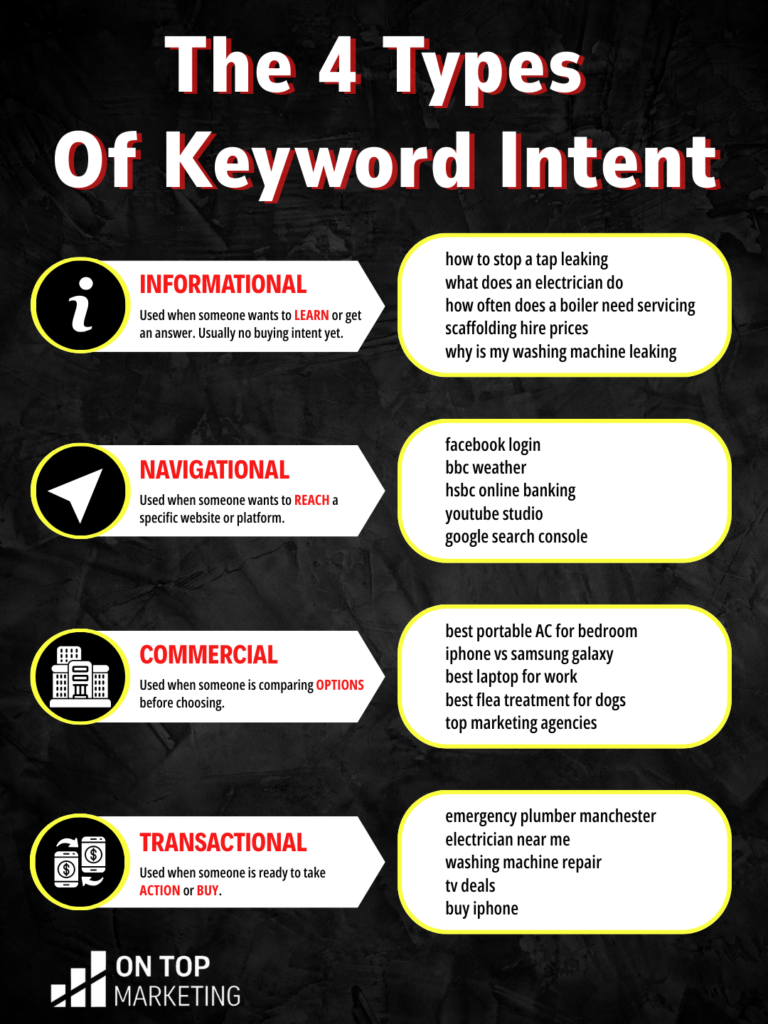
Each intent type tells you what the searcher is trying to do. Informational keywords mean they want answers and guidance, so a helpful article or guide is usually the best match.
Navigational keywords mean they already know the brand or website they want, so your job is to make sure your own business name and pages are easy to find and look trustworthy when people search.
Commercial keywords mean they are weighing up options, so comparison pages, pricing guides and honest breakdowns help you win trust before they decide.
Transactional keywords mean they are ready to act, so your service pages need to make booking or contacting you feel quick and simple.
When intent and page type match, people stay longer, read more and take the next step. When they do not match, they leave fast because the page does not give them what they came for.
That is why intent is not a “nice extra” in SEO. It is the foundation that helps Google understand your page and it helps the right customers land on the right content at the right time.