
High search volume keywords look tempting on paper. You open a keyword tool, see a term getting thousands of searches a month, and it feels like the obvious move.
Rank for that one phrase and it can feel like the leads should follow.
But this is one of the quickest ways to burn time on SEO without getting anything back.
Not because your website is bad but because search volume does not tell you what the person actually wants.
High Search Volume Does Not Mean High Value
A keyword can get loads of searches and still be useless for your business.
Some high volume searches are driven by curiosity, students, DIY researchers or people who are not ready to buy.
Others are so broad that Google has no clear idea what type of page should rank, which makes it far harder to compete.
Even if you do manage to rank, the visitors might not convert because they were never looking for what you sell in the first place.
Search Intent Is The Real Filter
Every keyword has an intent behind it. That intent decides what Google wants to show and it decides how a user behaves once they land on your page.
A simple example is someone searching “scaffolding hire prices”. They want pricing information.
If they land on a page that just sells the service and avoids real answers, they leave quickly. That tells Google the page was not a good match.
This is why high volume keywords can often be a trap. If your page does not match the intent, ranking becomes harder and even a good ranking will not hold.
The Four Keyword Types That Matter
Most keywords fit into four main intent categories. Once you understand these, it becomes much easier to focus on keywords that match the right type of page.
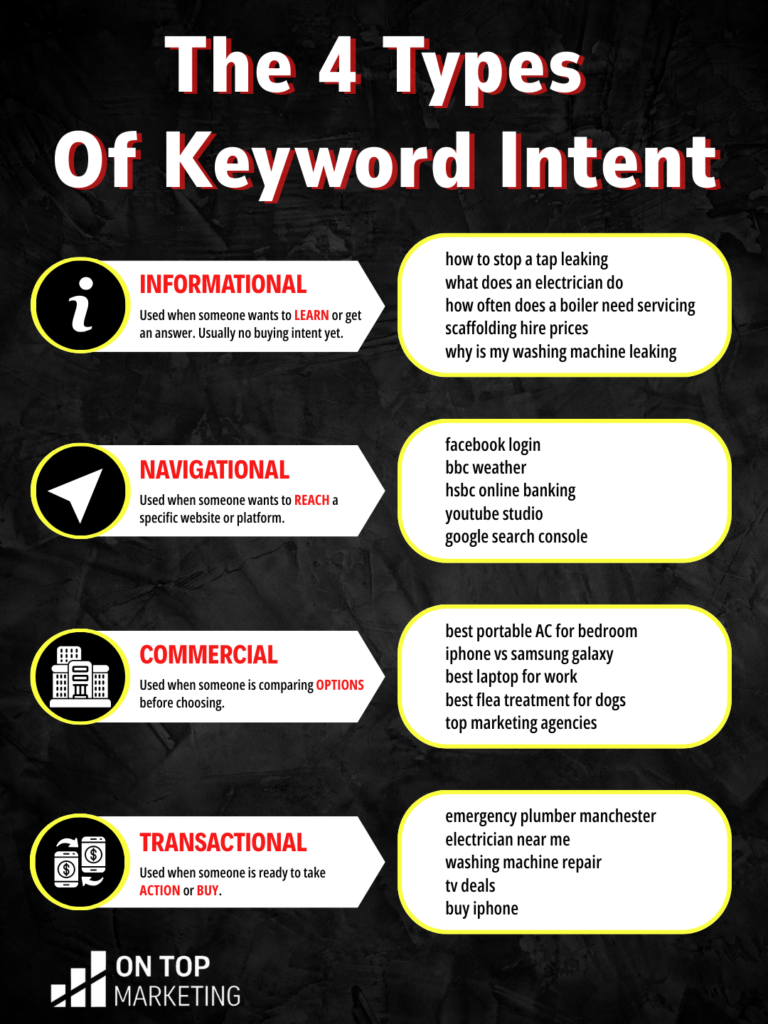
Informational Keywords
These are searches from people trying to learn something. They look like: “How much does it cost to service a boiler?” or “Why is my fuse box buzzing?”.
These visitors are not ready to buy yet. They want help, not a sales pitch. Blog posts and simple guides work best here.
Navigational Keywords
These happen when someone already knows where they want to go. They look like: “Instagram login” or “DVLA tax my car”.
It is usually only worth targeting navigational keywords that relate to your own brand name. Trying to outrank another company for their own name is a waste of effort.
Commercial Keywords
These are people comparing options before they decide. These searches look like: “Best air fryer for a small kitchen” or “Carpet cleaning prices vs steam cleaning”.
These keywords work well with comparison pages, honest pros and cons and pricing style content that helps people choose.
Transactional Keywords
These are the money keywords. It means the person is ready to act. These keywords look like: “Book a gas safety check near me” or “Same day locksmith in London”.
Pages targeting transactional keywords should make the next step easy. That could be a clear form, a click to call button or a strong enquiry option.
Why Broad Keywords Are Hard To Win
High volume keywords are often broad “head terms” like “plumber” or “scaffolding”. The issue is simple: they are vague.
A search like “plumber” could mean someone needs a quote or advice. It could also mean someone wants a job or someone is looking for a definition.
Google has to guess, which means the results are competitive and mixed.
Big directories and huge brands usually win because they have authority and scale. For smaller businesses, this becomes a slow uphill climb.
What To Target Instead If You Want Results
If you want keywords that actually turn into bookings and enquiries, aim for searches that show clear intent. These might get fewer searches per month but the people behind them are far more likely to take action.
Go After Specific Long Tail Service Searches
Broad keywords bring curious browsers. Specific keywords bring serious leads.
These searches are clear, local and action focused, which makes them much easier to convert. The examples are “boiler repair in Romford”, “emergency electrician in Ilford” or “end of tenancy cleaning Hackney”.
Target Problem Keywords That Match Real Customer Language
People rarely search using your perfect industry wording. They search using the problem they can see. For example, “radiator not heating up upstairs”, “toilet keeps running after flushing” or “shower pressure suddenly low”.
Create helpful pages that answer the question properly, then make it easy for them to contact you once they realise they would rather hire a professional.
Use Commercial Keywords That Show Someone Is Comparing Options
This is where customers are deciding who to trust, even if they are not ready to book today. These searches can look like “new windows cost vs secondary glazing”, “blocked drain cost UK” or “best CCTV system for small business”.
These work well for pricing pages, service comparisons and guides that explain options clearly.
Build Pages Around “Ready To Book” Phrases
Some searches are basically someone raising their hand and asking for help right now.
Examples are “same day appliance repair near me”, “book a roof inspection” or “pat testing quote”. Make sure those pages have a strong call to action, a clear phone number and a quick enquiry form.
Follow The Keywords You Already Get Impressions For
If your site is already showing up for a keyword in Google Search Console, even on page two or three, that is often low hanging fruit.
These are good signs that Google already connects your site to the topic. The examples can be “loft boarding price” or “garden waste removal cost”.
A proper page upgrade can push it higher faster than starting from scratch.
The Real Goal Is Not More Traffic But Better Traffic
It is always better to have 80 visitors who want to hire you than 10,000 who do not. High search volume keywords can feel like progress but they often create busy work.
When you focus on intent, long tail searches and transactional terms, you build pages that bring leads, not just clicks.
Even better, the right traffic tends to behave differently once they land on your site. They stay longer, view more pages and they are far more likely to call, fill in a form or ask for a quote.
Over time, that sends stronger quality signals back to Google because your page is clearly doing its job.
That is how you build SEO that actually supports the business, instead of just inflating numbers in a report.