
There is a reason some pages never move, even when the content is decent.
Google cannot confidently tell what the page is meant to rank for. Not because Google is “confused”, but because the page does not make the topic obvious in the places that matter.
Your H1 is one of those places.
How The H1 Tag Works For Users And Google
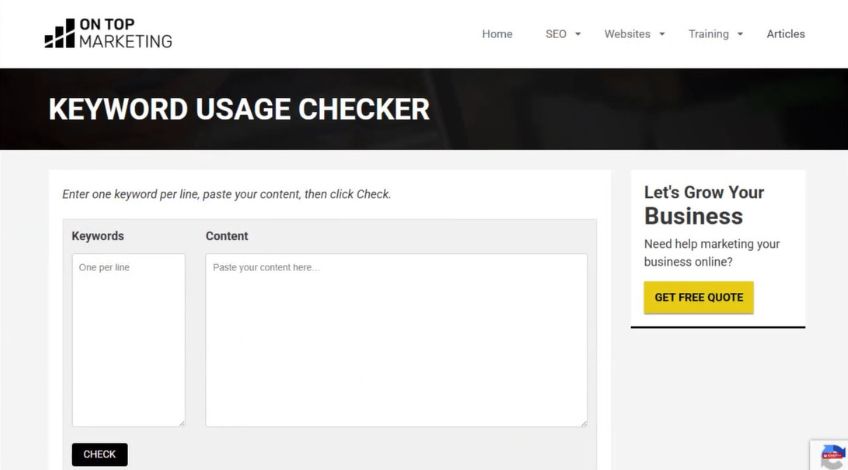
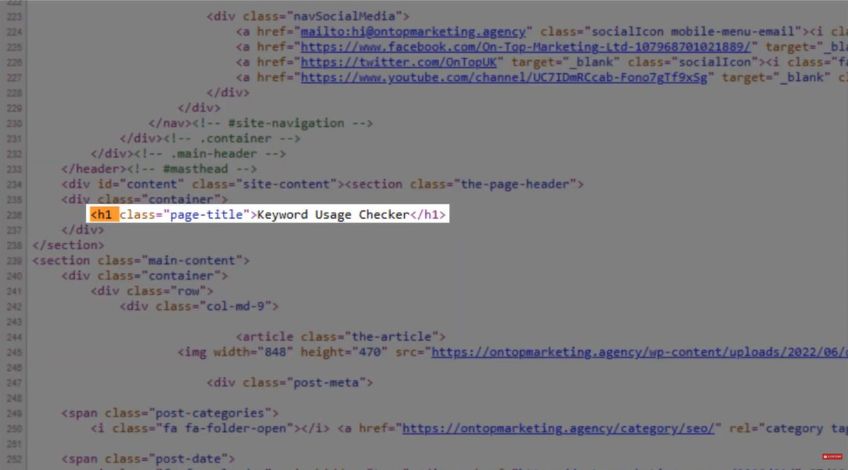
Let’s use this page as an example. The H1 Tag here is “Keyword Usage Tracker”.
An H1 tag is a HTML heading that usually sits at the top of the page. It is typically the biggest line of text on the page and it is there to tell people what the page is about.
Search engines use it too. It is one of the first signals that helps them understand the main topic, along with the title tag and the URL.
If you want a simple comparison, think of the H1 as the label on a folder. Before anyone opens it, they should know what is inside.
Why Google Cares About Your H1
Google is constantly trying to match pages to searches. The stronger and clearer your main topic signals are, the easier that job becomes.
If your target keyword is not present in your title tag, your H1 tag and your URL, it is often difficult to rank for that keyword.
When it is present, you have at least made it possible for Google to connect the dots.
It still needs the content to back it up but the foundation is there.
The “One Page, One Topic” Rule
In almost every case, you should have one H1 tag per page. That single H1 tells Google, “This is the core topic”. It also tells the reader the same thing.
If you stack multiple H1s across a page, you blur the message and the structure starts to feel messy.
If the page needs sections, that is what H2 and H3 tags are for.
How To Write An H1 That Helps Rankings Without Looking Spammy
The best H1s do two things at once. They include the keyword you are targeting and they still read like normal language.
Ideally, your main keyword is near the beginning of the H1 but it needs to feel natural.
A person should be able to read it quickly and immediately know they are in the right place.
If you force extra wording into the H1, it can start to look cluttered on the page, which is why it is common to keep H1s clean and use the title tag for extra phrases.
Why Your H1 Tag Alone Is Not Enough
On page SEO has a few core elements that work together:
- Title tag
the search result headline - H1 tag
the on page headline - URL
the page address that reinforces the topic
When all three point to the same topic, Google gets a consistent message.
When one of them points somewhere else, it weakens the signal.
The Fast H1 Check To Do Before Publishing
If you only do one quick check today, do this. Open a key page, then ask:
Does the H1 tell me the page topic in one glance? Does it include the keyword I want to rank for? Is there only one H1 on the page?
If you can tick those off, you have handled one of the most important basics properly.
After that, you can build out the supporting content, headings and related terms without the page feeling forced or confusing.