

Most people think of reviews as something that helps with sales. A nice extra or confidence boost for anyone who is not quite ready to buy.
In reality, reviews sit at the centre of how Google and AI tools understand your business.
They shape the story that appears when someone searches your name and they guide the systems that decide whether your company deserves to be trusted or recommended.
This makes reviews a core part of SEO. They are also a practical piece of online reputation management that every business owner needs to take seriously.
Why Reviews Shape What Google And AI Show People
Google and AI tools don’t judge your business the way a person would. They rely entirely on whatever information they can find online.
When someone searches your company name, these systems gather the most visible and repeated signals they can find and use them to build a picture of who you are.
Reviews play a major part in this because they act as direct evidence of customer experience.
If there are many recent positive reviews, Google and AI take that as a sign that your business is reliable and active.
If the only reviews available are negative or outdated, that becomes the version of your company they present to users.
Here’s why the online story can drift away from reality: You may have hundreds of satisfied customers in real life, yet if only a few have posted reviews, the digital version of your business looks incomplete.
One unhappy customer who posts the same complaint across several platforms can have a way bigger effect than you’d expect because Google and AI have so little else to balance it with.
Reviews also shape other results that appear for branded searches. They influence how your Google business profile looks and they provide snippets that AI tools can easily quote when users ask if your business is trustworthy.
When reviews are strong and consistent across different platforms, Google and AI have enough information to give users a positive and accurate view of your company.
When reviews are missing or limited, these systems have no choice but to rely on whatever limited signals exist, even if they do not reflect the real quality of your work.
The Real Issue Most Businesses Face
The problem is simple: Unhappy customers are far more motivated to leave a review than happy ones.
Many business owners do excellent work yet have very few reviews to show for it. Without a clear system for requesting feedback, the online version of your company becomes biased.
You might have hundreds of delighted customers but if only two of them leave reviews while three unhappy ones do, the internet paints a very different picture of your business.
A structured approach to review generation system solves this.
Where You Should Ask Customers To Leave Reviews
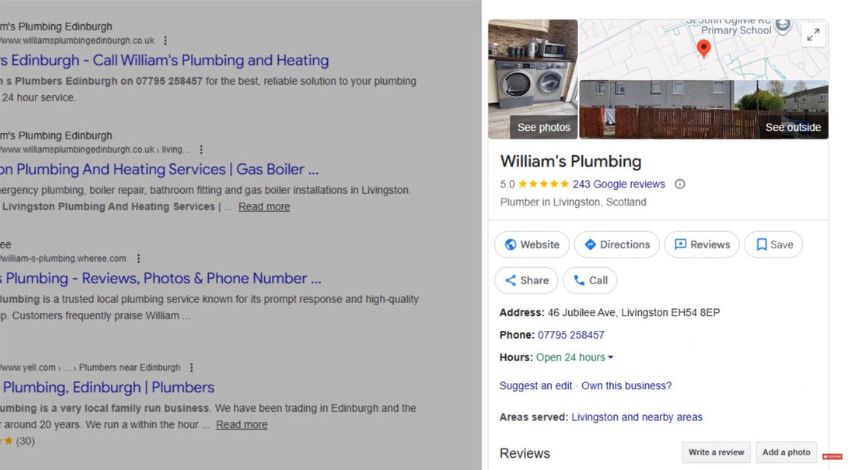
A good review strategy starts by choosing the right platforms and making the process simple for your customers.
Most people will only leave a review if you guide them towards the exact place you want it to appear and give them a link that opens the page directly.
Start With Your Google Business Profile
Your main focus should be your Google business profile because it shows up beside your branded search.
This is often the first thing people look at when they search your name.
Generate your unique Google review link inside your Google business profile settings. Send the link shortly after the job is complete while the experience is still fresh.
Keep your message simple and personal so the customer feels comfortable clicking through.
This helps you build a strong base of reviews in the place that Google considers most important for local visibility.
Expand To Supporting Platforms
Once your Google profile is growing, you should ask for reviews on a small number of secondary platforms.
These can include Facebook and Trustpilot. They provide extra proof of credibility and they can rank for your branded keywords which helps you control more space on the first page.
This gives you a wider footprint without making your requests feel heavy or repetitive.
Remember to avoid overwhelming the customer by asking for reviews on several platforms at once.
Make Review Requests A Repeatable System
A successful review strategy is not about asking now and then. It works best when you turn it into a steady part of your process.
You can do this by:
- Adding the review request link into your job completion workflow
- Setting up an automated message that goes out once a job is marked complete
- Training your team to ask for a review in person when appropriate
- Following up once if the customer forgets, rather than sending multiple reminders
This keeps the system friendly and predictable and it allows your reviews to grow naturally over time.
How Social Media Supports Your Reputation
Reviews do not work in isolation. Google and AI look for signals that your business is real and active. Social media plays a big part in this because it lets you show regular activity without needing long pieces of content.
Posting photos of your work, sharing customer testimonials, showing your team in the middle of a project, all of these things help build trust.
They also give search engines and AI more information to reference.
On top of that, social media can drive real traffic back to your website. Traffic remains one of the strongest signals for Google, no matter where it comes from.
Why Reviews Deserve Consistent Attention
Reviews are not something you fix once. They are an ongoing part of your marketing, a visible proof of the service you provide.
If you want your business to make a strong first impression, you need a reliable system for gathering feedback, active platforms that show your work and a steady stream of content that reflects who you are as a company.
Do these things and you give Google and AI enough information to recommend you with confidence. You also give potential customers a reason to trust you before they ever speak to you.
In a world where people decide quickly, this can make all the difference.