
Here’s what usually happens: business owners only notice their online reputation when something negative shows up in the search results. By then, the damage is done.
A single complaint or outdated post can rise to the top of a branded search simply because nothing stronger’s there to compete with it.
Search engines can’t decide which pages are fair or accurate. They just rely on whatever information’s available.
If your own presence is thin, negative content shapes the story for you.
Online reputation management is the process of taking back that control. It is about creating enough trustworthy content in enough places so that search engines have a clear and balanced picture of your business.
Social media platforms and review sites play a central role because they are some of the most influential pages in branded search results.
Why Strong Social Media Profiles Outrank Negative Content
Most people who search your company name aren’t browsing. They’re checking whether they can trust you.
This is why the pages that appear for branded keywords matter way more than most people realise.
If the only visible content is an old complaint or a harsh one star review, that’s the impression people leave with.
Social media profiles give you a way to change that. When they’re set up properly, they hold powerful positions in the search results.
Google treats them as trusted sources because they’re established platforms with real activity.
When each profile contains recent posts, photos of your work and signs your team’s active, it’s evidence of a genuine company. This alone can push negative pages further down.
Search engines prefer pages that are current, relevant and visited often. A neglected complaint on a forum can’t compete with that.
Over time, your own content becomes stronger than the negative stuff simply because you’ve given Google more to work with.
The Role Of Reviews In Online Reputation Management
Reviews are central to reputation. They’re one of the first things people click on when they search for your company name. They also influence how AI systems decide which businesses to recommend.
Here’s the issue: reviews usually appear in an uneven pattern.
Unhappy customers are way more likely to leave a comment than happy ones. Without a plan for collecting positive feedback, this imbalance lives on your branded search results and becomes part of your online footprint.
A solid review strategy protects you from this.
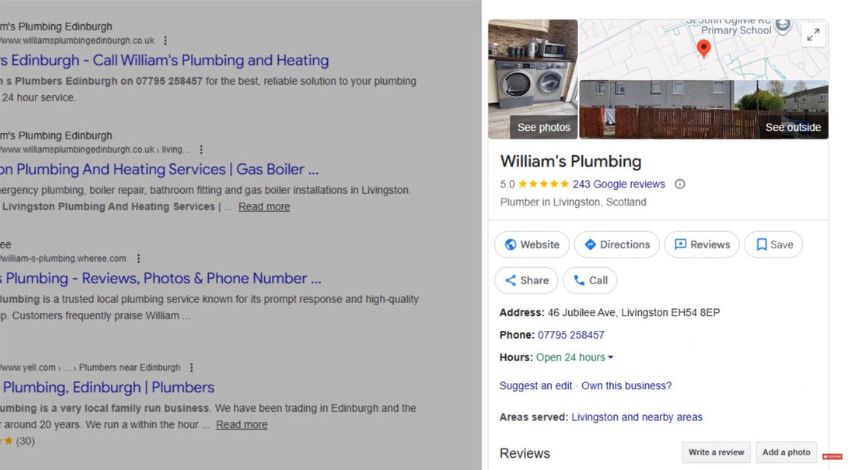
Start with your Google Business Profile. It appears on the right-hand side of the search results whenever someone searches your company name.
People notice it first so the reviews collected there play a major role in shaping their impression.
Then build out additional review pages on platforms like Facebook and Trustpilot. These sites often rank well for branded searches and create more visible proof that people choose to work with you.
As more reviews appear across different platforms, your branded search results begin to look more balanced. People can see recent ratings, steady feedback and a clearer picture of what it is like to work with your business.
This helps shift the focus away from older negative comments and gives search engines a stronger set of signals to rely on.
How Social Media Activity Supports Your Rankings
Online reputation management isn’t only about what people say. It’s also about what search engines can recognise.
Active social media accounts can send real visitors back to your website. This traffic can help your pages climb higher and increase the number of positive results that appear above negative ones.
Simple posts explaining your work, updates from your team or customer stories can all support this.
You are not only speaking to your audience but also showing search engines that people engage with your business.
Real Example Of Pushing Down Negative Forum Content
A client came to On Top Marketing when a negative forum post was ranking in position five for their company name. The forum post contained complaints about the business and appeared prominently when potential customers searched the brand.
The business had strong service quality but hadn’t built out their digital presence beyond their website. This gap allowed the negative content to rank highly simply because few other pages existed to compete.
The solution? Systematically building and optimizing branded profiles:
- Google Business Profile was claimed and optimized with photos, posts and reviews
- Trustpilot profile was created because review platforms often rank well for branded searches
- YouTube channel was optimised with company videos and proper branding
- Facebook and Instagram profiles were updated with regular activity showing recent work
- LinkedIn company page was claimed and kept current
Within months, the negative forum post dropped from position five to page two. The first page of search results now showed the company’s official profiles, positive reviews and current activity instead of a single negative voice.
The forum post still existed but it no longer dominated the narrative because stronger, more relevant pages had taken priority positions.
This Strategy Works For Google Search Results
Here’s something important: this approach specifically targets how your business appears in Google search results for branded keywords. When you create strong social profiles and review presence, you can push negative content further down the page where fewer people see it.
AI tools work differently. When someone asks an AI assistant about your business, it synthesizes information from all available sources including negative content. You can’t push things down in an AI response the same way you can in search rankings.
That said, having active profiles and positive reviews still helps with AI because it gives the system more balanced information to reference rather than relying solely on negative mentions.
Bringing Online Reputation Management Together
Outranking negative content isn’t a single action. It’s the result of consistent online reputation management. You’re building a footprint that tells search engines what your business stands for.
When people look up your company, they should see active profiles, recent reviews and examples of current work.
Create your social media profiles and keep them updated. Put a review strategy in place so positive experiences are captured regularly.
Do these things and you’ll shape the impression people have before they ever speak to you.
Negative content loses its power because it’s surrounded by stronger, more meaningful signals.
You stay in control of your story and your business stands on way more solid ground.