

Search engines rely heavily on URLs to understand what each page is about. When a URL changes without warning, Google sees it as a new and unfamiliar page.
Your old rankings disappear, the traffic that page once brought in fades away and users who still have the old address end up on an error page.
This is where the 301 redirect becomes one of the most important tools you have.
Why URLs Matter More Than Most People Realise
URL is one of the three core on page elements that help Google understand your topic.
Your H1 tells people what the page is about. Your title tag helps you rank and attract clicks. Your URL confirms the subject in a simple and readable way.
When a URL is short, clean and contains the keyword the page targets, Google understands it instantly.
But websites grow and pages evolve. As soon as the topic changes, the address often needs to change too.
This is the exact moment where rankings are lost if nothing is done to point search engines to the new location.
What A 301 Redirect Actually Does
A 301 redirect tells Google and your users that the old page has permanently moved to a new address.
Anyone who visits the old URL is taken straight to the new version.
This matters because a 301 redirect passes most of the page’s history and ranking strength to the new URL.
Without it, the new page starts again with no authority, no relevance in Google’s eyes and no connection to the traffic you once had.
When You Should Use A 301 Redirect
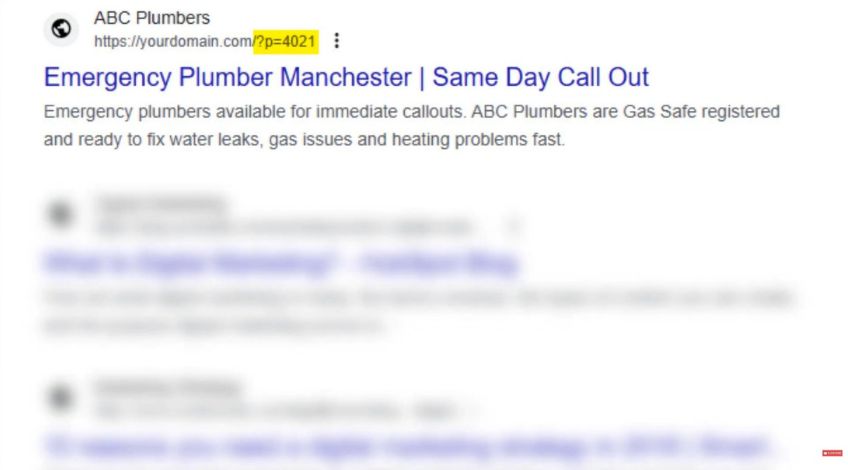
There are several moments in normal website management where a redirect is essential.
When your page topic changes
If you rewrite a page so that it is now about a different service, your URL must change to reflect that.
For example, you duplicate an “emergency plumber Manchester” page, rewrite it for “boiler repairs” but keep the old address.
That mismatch confuses Google.
You need to update the URL and set a 301 redirect from the old address to the new one.
When your CMS creates duplicate URLs
Many platforms create extra versions of a URL when two pages clash, often with a number added to the end.
These duplicates should be redirected to the correct page so Google does not index both.
When you replace unclear URLs
Some sites generate unreadable addresses containing numbers and symbols.
If you replace them with clear, descriptive URLs, you must redirect the old versions so their value is not lost.
When you reorganise your services
As your site grows, you might move services into new sections or restructure categories.
If a page’s address changes during this work, the old URL needs a 301 redirect pointing to its new home.
Why Redirects Protect Your SEO
Google builds trust and understanding over time. Every page on your site collects signals that help it rank.
When the URL disappears, all of those signals lose their connection.
A 301 redirect protects:
- the authority your page has already gained
- the external links pointing to that page
- the traffic that used to reach the old address
- the clarity of your overall site structure
Redirects allow your updates to take place without sacrificing the performance you have already earned.
How Redirects Improve User Experience
Good SEO always supports real people.
If someone has a bookmark, a shared link or an email pointing to your old page, they should still land on useful content.
A redirect ensures they reach the correct page rather than a blank error screen.
It also keeps your presence strong in AI driven search tools. These systems cannot rely on your content if your URLs break or disappear.
Avoiding Redirect Problems
Redirects need clean structure to work properly.
- Redirect each old URL directly to its final page
- Avoid chains where one redirect leads to another
- Update your internal links so they use the new address instead of relying on redirects
- Keep a clear record of your redirects to prevent loops or conflicts
A tidy redirect system makes your site easier for search engines to understand.
The Simple Step That Saves Your Search Visibility
A 301 redirect is one of the simplest and most important tools in SEO.
Any time a page moves, a topic changes or a messy URL is replaced with a clearer one, a redirect is what protects your rankings and keeps your users on the right path.
Use them consistently and your website becomes far more stable as it grows.
You can update content with confidence, knowing your visibility will stay intact.