Most people put hours into a page, then forget the one bit of copy that shows up before anyone even visits it.
That bit is your meta description. It is the short text that often sits under your title in Google. It is not there to impress Google’s algorithm.
It is there to help a real person decide if your result is worth their click.
A Meta Description Is A Mini Preview Of The Page
A meta description is a short summary that can appear under your listing in search results.
It is written in your page’s code but it is aimed at searchers, not your website visitors.
You can think of it like the blurb on the back of a book. It does not tell the whole story. It tells you enough to decide if you want to open it.
How It Influences Click Through Rate
When someone is scanning results, they are comparing quickly. Your title tag gets noticed first but the meta description is often what makes the result feel relevant.
It reassures the searcher that your page answers the exact thing they typed. If it sounds generic, your listing blends in. If it sounds specific and helpful, it stands out.
That is why meta descriptions are closely linked to click through rate. They shape the decision, even when rankings stay the same.
What To Put In A Meta Description So It Works
You do not need clever writing. What you need is clarity.
A good meta description usually includes:
- The main keyword, naturally
- A clear promise of what the page covers
- A reason to trust you, like speed, coverage, experience or what happens next
- Language that sounds like a real person, not a template
Keep it short enough that it will not get chopped in search results. A sensible target is under about 160 characters.
A Practical Meta Description Example You Can Copy And Adapt
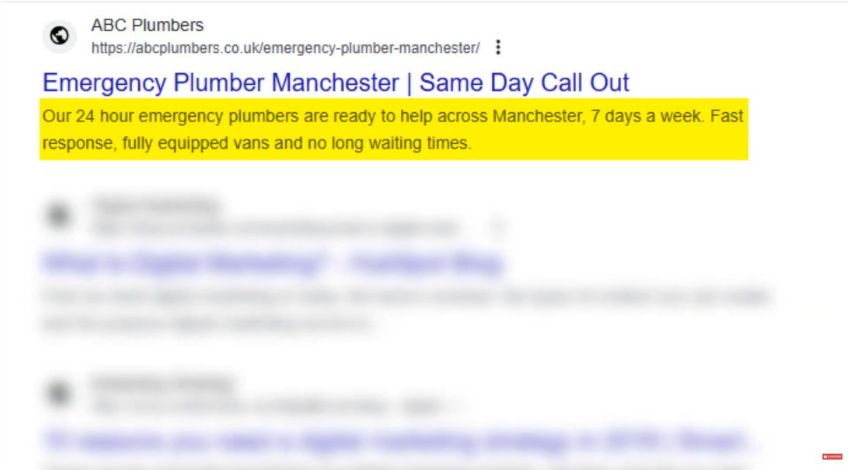
Say you have a page for “emergency plumber Manchester”. A meta description that just repeats “emergency plumber in Manchester” does not help much.
A stronger one gives the searcher a quick picture of the service. Mention 24 hour availability, fast response and that you cover Manchester every day.
Those details do the heavy lifting because they answer the unspoken questions in the searcher’s head.
Why Google Sometimes Shows Different Text
Even if you write a strong meta description, Google might choose not to display it.
Sometimes Google pulls a snippet from your page instead, especially if it thinks another sentence matches the search term better and that is normal.
It does not mean you did anything wrong.
It is still worth writing your own meta description because when Google does use it, you control the message.
And when it does not, you have still improved your page’s clarity by thinking through the promise.
A Quick Way To Upgrade Yours Without Overthinking
Open your most important service page or product page and rewrite the meta description like you are answering one question: What will someone get if they click this result?
If you can answer that in one or two short sentences, include the keyword naturally and add one specific detail that makes the click feel safe, you have done the job.