A small website can feel like the safest type of website to run. Fewer pages to manage, fewer things to break and a simple menu that makes it easy for people to get around.
So when someone says, “You still need a sitemap”, it can sound like overkill. Surely Google can find five or ten pages just by following the links, right?
Sometimes yes but relying on that alone is like assuming every letter you post will arrive just because you wrote the address clearly.
Most will but a few get delayed, misplaced or never picked up in the first place. A sitemap is how you stop that happening.
Internal Linking Helps But It Doesn’t Guarantee Discovery
Internal links are still the foundation. They help users move around your website and they help crawlers understand your structure.
But even with good internal linking, pages can slip through the cracks.
A new page might be live but only linked from one place you forgot about. A seasonal landing page might not sit in the main navigation. A blog post might be published but not linked anywhere yet.
In situations like this, pages can behave as if they do not exist, especially early on.
Pages that have no links pointing to them are often called orphan pages. They are easy to create by accident, even on a small site and they are one of the most common reasons content goes unnoticed.
A sitemap helps search engines discover these pages without needing to stumble across them through links.
A Sitemap Is Your Website’s Checklist For Search Engines
An XML sitemap is a file on your website that gives search engines a clear list of your pages in one place.
It helps them locate those pages and see when each one was last updated.
That matters because search engines are not browsing like humans. They are scanning, prioritising and deciding what to crawl.
A sitemap makes that process clearer by laying everything out in one place.
It is also helpful when you publish a new page that does not have links pointing to it yet. The sitemap can highlight pages that might otherwise be missed, including orphan pages.
Since search engines do not have unlimited resources, it also helps them crawl your site more efficiently.
And when the sitemap updates, it can encourage search engines to come back and recrawl pages that have changed.
Sitemaps Improve Crawling Efficiency Even On Smaller Sites
Search engines do not crawl websites endlessly. They have limits and they choose where to spend time based on what they think is important.
A sitemap makes crawling more efficient because it gives search engines a clear map of your pages in one place.
That reduces wasted crawling and helps attention flow to the pages that matter.
Even a small website benefits from that because you are making it easier for crawlers to do their job properly, sooner.
The “Last Updated” Signal Is More Useful Than Most People Realise
Your XML sitemap includes information about when a page was last updated. This matters because changes can trigger attention.
When a search engine notices a sitemap has changed, it can encourage it to recrawl those pages and refresh what it has stored in its index.
In practical terms, updates are more likely to be noticed.
So if you rewrite your service page, add extra FAQs, improve your images or tidy up your structure, a sitemap can help those updates get seen sooner rather than later.
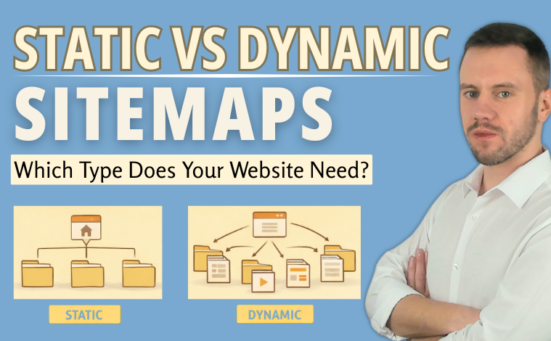
Static VS Dynamic Sitemaps: What Small Sites Should Use
The right type depends on how your website is built and how often you change it.
A static sitemap is manual. Every time you add, remove or change a page, you need to edit the file and upload it again.
That is fine for a small website that rarely changes but it can cause problems if you forget to update it.
A dynamic sitemap updates itself automatically as your site changes. This is usually handled by a plugin or built in feature of your CMS.
If your site is on WordPress, Shopify, Drupal, Magento or something similar, a dynamic sitemap is usually the better option because it removes manual upkeep and reduces the chance of errors.
Why This One Simple File Can Prevent “Invisible Page” Problems
The big idea is this. A page can exist, look great and still not get discovered properly. That is not because your site is broken.
It is because crawling and indexation are not guaranteed, even on a smaller site.
A sitemap gives search engines a clear guide, helps them find pages that links might not surface quickly and improves how efficiently they crawl your content.
So even with tidy navigation and smart internal linking, a sitemap is still worth having. It is a small setup job that can save you a lot of confusion later.